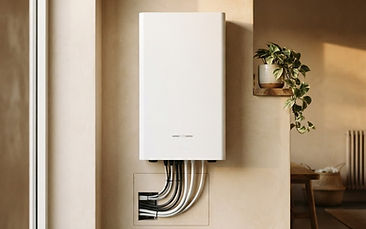
Is Home Battery Storage Worth It in 2026?
What a home battery actually earns, the four value streams that justify one, and the honest cases where it does not pay back.
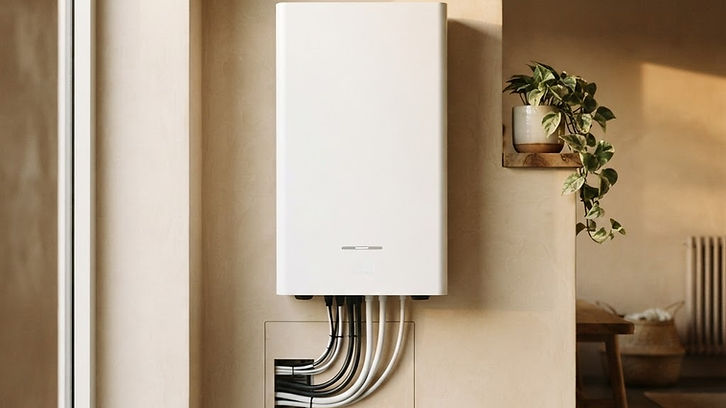
A home battery is the least obviously economical of the four technologies in this directory, and the one most often sold on emotion. It can be a strong investment, but only when it is doing at least two jobs.
What a battery actually does
It stores electricity — from your solar, or from the grid at a cheap time — and releases it when power is expensive. Everything it earns comes from the price difference between those two moments, minus the round-trip losses of around 10%.
The four value streams
- Self-consumption of solar. Instead of exporting at a low rate and buying back at a high one, you keep the energy. This is usually the largest single benefit.
- Tariff arbitrage. Charge overnight on a cheap rate, discharge during an expensive evening peak. Valuable where the gap is wide and the cheap window is long enough.
- Backup power. Keeps essentials running during outages. Hard to value in money, but real — and increasingly important in wildfire and storm regions.
- Grid services. Some markets pay batteries to provide frequency response or flexibility. Payments are modest but growing.
When a battery pays back quickly
- You have solar and a poor export rate.
- Your evening electricity is expensive and your overnight rate is cheap — a spread of three to four times is the threshold where arbitrage alone starts to work.
- Your state, province or country offers a storage rebate.
- Your household uses a lot of electricity in the evening: cooking, heating, EV charging.
Australia and parts of the UK currently show some of the strongest cases, because time-of-use spreads are wide and state battery schemes exist. In much of Canada and the northern US, cheap baseload power makes arbitrage weaker, and the case rests more on backup and solar self-consumption.
When it does not
- You have no solar and a flat electricity tariff. There is nothing to arbitrage.
- Your export rate is close to your import rate — which is rare, but exists in a few schemes.
- Your daily usage is small relative to the battery's capacity, so it never fills and empties fully.
- The battery is being sold purely as an outage guarantee in an area with a reliable grid.
Sizing: bigger is not better
A battery sized to your evening usage, not to your total daily usage, performs best. If you use 8kWh between 4pm and midnight, a 10kWh battery will cycle almost fully every day. A 20kWh battery will sit half empty and take far longer to pay back.
Ask the installer for a stated daily cycle profile, not just a capacity figure.
Chemistry and warranty
Lithium iron phosphate units dominate the residential market because they are stable and long-lived. Look for:
- A warranty stated in cycles or throughput, not only years.
- A stated usable capacity, since usable is always lower than nominal.
- Clarity on whether the warranty survives being used for grid services.
The honest summary
A battery makes a good solar installation better, and rarely rescues a bad one. If your export rate is decent and your tariff is flat, put the money into more panels or better insulation first. If the spread between cheap and expensive power is wide, storage is one of the better returns available in home energy.
Compare accredited battery installers: UK, US, Australia, Canada.
Frequently asked questions
How long does a home battery last?
Most modern units are warranted for 10 to 15 years and 6,000 or more cycles. Real-world life depends heavily on how deeply it is cycled and how hot it gets.
Can I add a battery to existing solar?
Usually yes, with an AC-coupled battery. It is a simpler retrofit than replacing the inverter, though slightly less efficient than a DC-coupled system installed at the same time.
Will a battery keep my heating on in an outage?
Only if the battery is wired to power those circuits and can supply the startup current. Whole-home backup needs a gate and a larger inverter, and should be specified deliberately.